“Don’t sit under the apple tree with anyone else but me Anyone else but me, anyone else but me, no, no, no
Don’t sit under the apple tree with anyone else but me Till I come marching home.”
Mother’s Day is just around the corner as I write this short story about mine. Ironically, it’s not the holiday that reminds me most of my mom. Except for the one right after her passing, when I stood in a Hallmark store picking out a Mother’s Day card for my mother-in-law and burst into tears, then hurried out the door to grieve somewhere privately. My mom wasn’t one for overly sentimental greeting cards. A simple love you for no particular reason, on any given day, was enough to make her smile. She also appreciated a shocking story, a sarcastic joke, a sharply recited limerick.
Once I caught her singing a bawdy tune about Buffalo Bill to my newborn daughter while rocking her to sleep. I reminded her how inappropriate that song was for a child and she said it won’t be remembered, anyway. I pointed out that we can’t be sure what babies remember and she added, “Well, I hope I’m remembered fondly.” I suggested she sing my daughter the one about sitting under apples trees that she used to sing to me as a kid. As a teenager too, until I begged her to stop. It’s a wartime song, but one she remembered fondly because her dad used to sing it at the top of his lungs if he’d had too much to drink. It’s a catchy tune, more silly than tender, yet it still gives me goosebumps when I hear it, which is next to never now. I have to go looking for it, and I did that when I flipped over the calendar to May and saw that past me had already circled Mother’s Day, lest I forget.
I read somewhere recently that music gives goosebumps to those who are hyper-sensitive. I’ve always been a sensitive type. More so than I remember my mom being. More like my dad in that way, I suppose. Sometimes when Mom’s humour got too risqué, Dad would tell her to quit pushing the envelope before she offended somebody or hurt their feelings. I miss hearing old sayings like “don’t push the envelope”. “Don’t step on my pink elephant” popped into my head the other day when someone was being a killjoy–another fun word rarely heard anymore. My dad often wanted things to be calm and perfect, including me. It was Mom who reminded us both that it was okay to be perfectly imperfect. To tell a bad joke to lighten an even worse mood. To sing a silly song too loudly, just for the heck of it.
To honour her memory, I chose the Mother’s Day weekend as the grand opening for my yarn store when I opened it in 2007. I spent a lot of time with my mom in the retail shops she managed over the years and I knew she would’ve got a kick out of me having a shop of my own. I also knew she was with me in spirit when I decided to close it fourteen years later. “Onward and upward,” she used to tell me after I’d made a tough decision or if my heart was broken. Onward and upward: another good, old saying. I’m sure it’s what I told myself that day in the Hallmark store.
Don’t Sit Under The Apple Tree – a song made famous by Glenn Miller and the Andrews Sistersduring World War II. This silly stage version makes me smile.
“The horizon leans forward, Offering you space to place new steps of change.” ~ Maya Angelou
The above quote is from one of my favourite Maya Angelou poems “On The Pulse Of Morning”. I thought about it recently. It’s the sort of poem that once you read or hear it, the steadfast hope for humanity never really leaves the back of your mind. Like a song or a painting that continues to speak to you on a deeper level, even if you haven’t thought about it in years. Until you remember it out of the blue one day. Or, in my case, out of the pink.
I’ve become an early riser. I do think you can be an early riser, but not necessarily a morning person. I like to be left alone with first thoughts and very little conversation over a cup of freshly brewed coffee. This wasn’t always possible and now it usually is. In these bleaker mornings before the winter solstice, I get up to make coffee and bring it with me to my office, where I turn on only one lamp and sit in semi-darkness to write my morning journal pages. Or I open the folder of my novel to continue where I left off editing the day before. I feel the most creative before troubling world news or the day’s tasks have a chance to filter in, along with the first signs of light at the window next to my desk.
The other morning I looked up from what I was writing to see the entire room around me was bathed in a pink sunrise. I glanced out the window to discover an astonishingly beautiful sky, then rushed to the front door to stand outside, shivering in PJs to snap a quick photo before the perfect moment was gone. Then I went back to my desk, remembering Maya Angelou’s poem about the pulse of morning and new steps of change.
This year I wrote a second novel. All the way from the beginning to a more recent end. I can’t tell you what day I started or exactly how long it took me to complete over many months. I only know I wrote the last sentence before I wrote the first one. For once, the ending was clearer to me than the beginning. I didn’t feel the need to document the process this time, not in the same way I did the first one, as though I was looking for permission to pursue the dream again. To call myself a writer.
After so many years of not writing, I think rediscovery was the complicated journey I needed to take, treading lightly, carefully. I wrote that first novel and my initial blog posts here with a sense of wonder. A sense of this is who I was and this is who I am now. Every thought, every memory shared, was a hidden pathway back to the writer I held on pause for thirty years. Once I rediscovered words, I began to struggle with what next and what does any of this mean? Reconnecting with The Writer has reminded me that creativity, like most things in life, requires confidence. Along with the determination to block out excuses and doubts and obstacles I tend to put in place like a protective barrier whenever something begins to feel too impossible to accomplish.
One morning I wrote in my journal: Word by word by word. That is how a novel is created. That was how both my novels were created. The first one out of wonder that I still had it in me to string along sentences into a satisfying story with a beginning, middle, and end. The second was written with intention. Less wonder, more focus. I already knew I could take the meandering journey from beginning to end. Now I had to figure out the next steps. The way forward that sits in between finishing one journey and digging deeper to start another.
May the coming year bring new steps, new focus, new pathways between yesterday and tomorrow. Renewed hope and confidence.
“Lift up your eyes upon This day breaking for you. Give birth again To the dream.“
“If I waited for perfection, I would never write a word.” ~ Margaret Atwood
There’s something about the week leading up to the autumn equinox that makes me more aware of my surroundings than at any other time of the year. Late September feels like the beginning to something I can never quite figure out. It must be related to the days of sharpening fresh pencils and wearing new sneakers that pinch toes because they haven’t been broken in yet. Daylight has begun to shorten and yet the hours somehow feel longer. The other day I asked myself, Do I move forward or stay in the same spot?
Recently I went on a short road trip getaway with my husband to the West Kootenays. We usually do that in August once work has slowed down a little for him. A few days to do nothing except float in mineral hot springs and take long, meandering walks along the lake. Pure bliss. This year we decided to go in September, thinking it would be less busy on the roads and it was. There were moments when it felt like we had mountainous highways all to ourselves and it gave me, the passenger, time to look at beautiful scenery, listen to classic rock, and think about where I am in my novel. That’s the only downside about taking a break from writing. The momentum gets lost.
I’ve spent most of my life thus far squeezing writing in when I can or when I feel motivated to do it. After closing my yarn shop a few years ago, I found myself with a lot more free time and no heavy business worries to focus on. It was the same weightless feeling of a busy school year ending and summer stretching out with endless possibilities. For the first time in a very long time I was able to focus on myself. At first I took some time to do nothing, really. Just putter about the house and organize messes I never got around to doing while working full-time. That’s the thing about mess, though, it always sneaks back in. At least it does for me. And I’m A-okay with that now because there’s so many other things I’d rather do than clean and sort and organize.
My mother told me something a long time ago when I was a young mom trying to balance work and kids’ activities and household chores etcetera etcetera. She said, “Nobody is remembered with perfect housekeeper written on their headstone, and if they are, well, isn’t that a damn shame?” I thought that was hilariously ironic then because my mom always worked outside the home and kept a fairly tidy house, and she still cleaned mine from top to bottom whenever she visited and I never knew if I should feel insulted about it or deeply grateful. I’ve only just realized she did that to give me a free moment to myself. Age and experience had taught her as it has me that mess will always come back no matter how hard we work to stay on top of it. It’s time for yourself that escapes far too easily.
These days I catch up on chores when I can and when I feel motivated to do so–the way I used to do with my writing. I’ve been meaning to clean my oven for three months. Almost every morning I tell myself I should do it over the summer before I use it more often in the fall and winter months. Then I pour myself a cup of coffee and sit down at my desk to write. One summer day I decided instead to put on the air conditioning and roast a turkey dinner with all the trimmings for the entire family in honour of my son-in-law’s birthday. If I was going to clean the oven anytime soon, maybe I should really mess it up first. It still hasn’t been cleaned, but that unexpected turkey dinner was delicious and seemed well-received by everyone.
A day or so after we returned from our road trip, once everything had been unpacked and washed and put away again, I sat down to continue working on my novel and the only word I can think of to describe how I felt is numb. So I pulled out my writing journal to try to make sense out of it and saw the last time I wrote in it was back in July. I try not to look over past pages in my journal. In fact, I use a clip to close previous pages so the next time I open it I can focus on what comes next. Since July I’ve been working almost daily on my novel and haven’t felt the need to question where I am in it. It’s a pattern, or so my journal reminded me when I did look back. Sometimes I write because there is no other alternative. It’s what I must do before everything else. Other times what made sense to me last week suddenly feels like a load of rubbish. Yesterday I wrote in my journal: I have stepped away and now the inner critic has stepped in.
Usually it helps when I’m stuck to go back and read my first chapter to remind myself what originally excited me about the characters and the story. I tried it and that’s when the numbness set in. Along with the question of do I move forward or stay where I am? I decided not to change a thing until I know for certain it’s me the writer and not me the fixer who is in control. At this point it would make perfect sense for me to tackle that dirty oven. I did open it one morning and made a face at it before closing the door. Then I picked up my knitting and put a record on the turntable and lost myself in the mindlessness of knitting a plain hat in the round to let my thoughts wander as they did along mountain roads.
“If wishes were horses, beggars would ride.” ~ Scottish proverb & nursery rhyme
I have a story that began last week and also a very long time ago. I wasn’t going to share it, but when I told a friend about it and saw her reaction, I realized I wanted to write it down to think about it some more. First I need to give a bit of backstory to (hopefully) help it make more sense for anyone who hasn’t read my previous posts about why I started writing again after thirty years. It’s complicated, but to keep it short: I now have the space and time in my life to allow the creative process to take over because that’s what it does for me. It completely takes over. In the space of a year I wrote a novel, and then I rewrote it several times more. Finally satisfied, I sent query emails to a couple of literary agents along with the first chapter. And then I started writing a second novel that’s a spin-off from the first one. About halfway through the second novel, I realized this story could not exist until I was truly happy with the first one. Confusing, I know.
It was summer by then and I decided to step away from my desk to get out of my head and spend more time outdoors. The younger writer I used to be would’ve told myself to quit overthinking the process and press on. This older version understands after living a long time that creativity is not a race to the finish line. It’s a marathon of uphill climbs. Something wasn’t working for a reason and I needed space to figure out why. By fall, I was itching to write again, but still not ready to revisit the two novels. So instead I read insightful memoirs about writing written by published authors. One of those was Stephen King’s “On Writing, A Memoir of the Craft”. I’d read it once before when it was published about twenty years ago and can’t remember what I thought about it then. This time, however, I found myself dog-earing pages and highlighting paragraphs to read again and again. Above all else, one idea of his particularly inspired me and I’m paraphrasing it here: if two separate stories aren’t working, try combining them into one. It was as if a light turned on in my imagination. And so begins a different (yet familiar) novel…
I borrowed a character from each of my two novels and I made them sisters. I made them my age. I took a lake from one story and a small town from the other and I relocated it and combined it under one made up name. The setting is loosely based on two places I spent a lot of time in during my late teens and early adulthood. Hope, B.C. where my parents had their retirement house, and on Cultus Lake where I spent many long summer days hanging out with friends. I made the two sisters complete opposites, telling their story from very different perspectives and outlooks on life. In other words, one chapter is told by one sister and the next one is narrated by the other one, and so on. In order to create and keep track of their unique voices, I’ve had to mentally envision them as Nice Sister and Mean Sister. Not their names, of course, just their attitudes. And not surprising, Mean Sister’s perspective has become the most fun to write.
It’s a story as old as time. Siblings who must confront a shared past while temporarily stuck together in the present moment. It’s summertime in a small, lakeside town. There’s a cast of quirky, secondary characters–the townsfolk–who have secrets and troubles of their own. The sisters grew up here, abandoned by their superstar mother in the early seventies so she could freely chase her rock and roll dreams. Then they’re reunited with her as teenagers in the late seventies to become her backup singers for one summer tour. Now in their fifties, the sisters are forced to reconcile the past in order to move forward in their present lives. And because this is written by me, there must be humour to even out the drama, and great background music to give it a dreamy, nostalgic feel. My comfort tunes, mainly from the sixties, seventies and eighties. The music that has shaped my own life and inspired me to dream. The first chapter begins at the present time, with Nice Sister about to take a shower when the doorbell rings….She answers it to receive an unexpected gift package from an unknown person. While this has no meaning right now, it does later on in my real-life story–which I will get to very soon, I promise.
Chapter five, at exactly 13,793 words, I mopped one of the sisters, figuratively speaking, into a corner and I had to wait for the floor to dry for the next scene to unfold in my mind. I was as stuck as she was. While staring at a blank page, the cursor blinking at me, I suddenly typed this from the character’s perspective: “If wishes were horses, beggars would ride. My grandma used to say that, I think. Or maybe I’d heard it in a song.” My paternal grandmother did used to say that to me often when I was a kid. I’d tell her I wish I had this or I wish I could do that and she’d give me that horses line. It’s a Scottish proverb and a verse in a very old nursery rhyme. I had no idea why she was calling me a beggar because all I’d done was state the truth. My own sisters have said that as a toddler I used to tell them, “I wish I was a mouse so I could climb into your pocket and go with you.” A storyteller, even then. As for the song part, it was also familiar to me in a warmly nostalgic way, but I couldn’t place it. So I went on a Google deep dive, as the curious tend to do when avoiding work. This is what I remembered…
In seventh grade there was a song that played so often on local radio station CFUN that I ended up making a poster of it in art class. “Roxy Roller” by the Vancouver glam rock band Sweeney Todd. Nick Gilder was the front man of the band at that time. He left shortly after ST became successful to pursue a solo career–also a story as old as time. That was when local boy Bryan Adams, at only sixteen, became the front “man” for a short time and he’s featured on Sweeney Todd’s album “If Wishes Were Horses”. It’s considered a very rare album now because not many are still in circulation, or so I’ve discovered. Kind of niche, and only something Canadians, more specifically British Columbians that were teens in 1977 might still fondly remember. For reasons unknown, it’s nearly impossible now to listen online to Bryan Adams’ full version of “If Wishes Were Horses”. Trust me, I did the dive. Bryan’s voice was very different then and not at all the raspy, familiar voice of the eighties and onwards. He also had a solo disco song in his late teens that I used to dance to with friends called, appropriately, “Let Me Take You Dancing”. He had the voice of an angel then, although he may beg to differ now.
I decided one evening at around ten o’clock–the perfect time to make rash decisions–that I needed to get my hands on that old album again for the sake of my writing. Somehow it had written itself into my story and I needed to understand why. I’d already found one available for sale on Etsy that was being sold by a local seller in Vancouver. This person, a woman I later discovered, has very good reviews and a ton of used vinyl sales. It was reasonably priced. It was in excellent condition. It was local. I used to love it. All signs pointed to go! I paid for it and that was that. I was about to shut my laptop and go to bed to read when, almost instantly, I got an email notification from the seller. I thought about leaving it until the morning, but I wondered if there was a problem with the sale. So I read the long message and I was surprised by all of it. Astounded, actually. I decided not to respond until morning in order to process what I’d just read. I stayed awake for a long time thinking about it. About life, about being young, about how our best dreams rarely change, and how we sometimes take the long way to get to where we’re meant to be. And by two in the morning, how just one message can lead to a very long, restless night.
What the seller told me was that she laughed when my album purchase came in late at night because she’d just been coincidentally in my area shopping earlier that same day. It’s funny how life goes sometimes, isn’t it? Yes, it is, we agreed. We’ve had more email conversations since that first one and this is where the story turns from haha to are you kidding me? Turns out she is a writer and music lover like me, who recently started writing again after closing her business, also like me, shortly following the pandemic. She now lives in the very place I am currently writing about–Cultus Lake. We are around the same age and both grandmothers. We love books and vintage finds. She sells her found treasures online, I just collect mine. Oh, and by the way, she was Bryan Adams’ high school girlfriend right before he left to join Sweeney Todd to be on the album I’d just purchased.
I’ll let that sink in…
Early in the morning, two days later, I was getting ready to take a shower when the doorbell rang. A package was left by our Canada Post carrier on the doorstep. Sound familiar? Unlike my character’s gift package that I wrote about several weeks before this day, my gift package was from myself. The “If Wishes Were Horses” album. Tucked inside was a postcard note from the seller giving me her best wishes on my story and a few other personal tidbits I’ll keep to myself. For some reason I was nervous about playing the album, specifically that song. Was I expecting too much? Had this gotten so blown out of proportion that I was romanticizing it into something more than it is? The answer is, it’s everything I needed to hear at exactly the right moment.
When I finally sat down to listen to Bryan’s much younger, angelic voice sing the lyrics I believe he co-wrote at a time when he was probably hoping all of his music dreams would come true, it made me unexpectedly emotional and even more introspective. I thought about my own dreams at fourteen. I saw myself so clearly, listening to this same song. Maybe I was thinking about the singer, imagining who he was because nobody really knew him then. Maybe I was thinking about my grandma too, who used to say the same thing to me. If wishes were horses, beggars would ride. I’d lost her at thirteen, yet here she was again in a song. Now, after thinking about it some more, I’ve come to realize that my younger writing self is reminding this current self to keep believing in the creative process, no matter how long it takes to sort the story out. That’s why I’m sharing it now, just in case you need a reminder to keep following your story.
If Wishes Were Horses, Sweeney Todd lyrics
“Come with me you can wish upon a star You can do all the things that you’ve longed to And you won’t have to wonder who you are You can be anybody you want to In a land full of promises and kings All your best laid dreams are for catchin’ You can have the world to tie up on a string Just close your eyes and imagine If wishes were horses Beggars would ride All dreams and desires would ride along side Worries and troubles would fall off behind If wishes were horses, beggars would ride
To a land far or near come along There’s an all new-round everyday glow Like the young girl sang in the song ‘Somewhere over the rainbow'”
If Wishes Were Horses (featuring Bryan Adams) Sweeney Todd – back cover photo of Bryan Adams
“No matter what your age or your life path, whether making art is your career or your hobby or your dream, it is not too late or too egotistical or too selfish or too silly to work on your creativity.” ~ Julia Cameron from The Artist’s Way
Julia Cameron’s book The Artist’s Way: A Spiritual Path to Higher Creativity was recommended to me by a writer friend when it was first published in the early nineties. At the time she had teenagers and I had toddlers and I remember thinking, I barely have a thought that’s my own! How can I possibly fill three notebook pages every morning with whatever is going on inside my head? But I’ve always liked a challenge and I wanted to be more creative and less task-driven, so I borrowed my friend’s well-used copy of the book. Essentially it gives you exercises and a long pep talk to help you overcome the beliefs and fears that can inhibit the process in whatever creative medium you’re pursuing. Sounds simple enough, doesn’t it? I gave it my best shot for about a week, until the pages began to fill up with to-do lists and doodles, Dear Diary-like entries, and maybe a rant or two. It was the right book, it just wasn’t the right time for me to fully engage with it. When the thirtieth anniversary edition of this same book recently found its way back into my hands, I casually flipped it open to read the inside flap and the first sentence I read is the one that’s quoted above. Then I thought, I need this right now.
So I read it, cover to cover this time. And I quickly learned that I don’t need to explore every aspect of it. I don’t need to do every exercise and keep consistent creative check-ins. What I have been trying to do, though, is write daily Morning Pages. Julia Cameron capitalizes the two words throughout the book to stress their importance, I suspect, and now I find myself doing the same with a kind of reverence for the practice because I’m seeing positive results. What are Morning Pages? Here’s some quotes about that from from the book: “Three pages of longhand writing, strictly stream-of-consciousness…These daily morning meanderings aren’t meant to be art or even writing…They might also be called a brain drain.” In more modern phrasing, it’s basically a brain dump. A way to clear the mess on the floor to get to the comfy furniture. I’ll be honest, I rarely fill three pages. Usually two, sometimes less. I don’t force the process, or at least I haven’t so far. Writing is hard enough without adding the pressure to perform on command.
In the beginning I wondered why longhand writing and not a keyboard now that we live fully in a digital world and not suspended in 1992. Here’s what I think: a written sentence can’t be deleted. Sure, it can have a line drawn through it or if in pencil erased almost invisibly from the page. Just the process of putting a line through a sentence or a word made me rethink wanting to get rid of it in the first place. It might be important, I considered, maybe even the truth of the matter. According to Julia, “Morning Pages get us beyond our Censor. Beyond the reach of the Censor’s babble we find our own quiet centre.” Something else occurred to me. What if one morning happens to be particularly busy? Should I write Night Pages instead? Once I became fully engaged in the routine, I realized mornings offer the freshest insights and I should probably get up a half an hour earlier to stick with the program. By nighttime our weary thoughts have become clouded by the day’s experiences and the many injustices of the world. The morning is full of creative possibilities waiting to unfold. The following paragraph is the uncensored ramblings I wrote in my notebook on the first morning.
“I tried reading The Artist’s Way when the book first came out thirty years ago. I was writing a lot then. So many ideas kept coming at me from all directions and I needed advice on how to organize them all. Not as many ideas come as easily to me these days, and here I am again, a little lost, looking for some kind of direction. A similar scenario, only this time, thirty years later, I have more time and energy to focus on writing. My younger self had very little time to sit alone with deeper thoughts and imaginings. I was raising a family, working, keeping up the house, and worrying about the diminishing health of ageing parents. I used those precious snippets of writing time wisely and efficiently. I scribbled ideas and dialogue on wrinkled grocery lists and old receipts. I was focused whenever and wherever inspiration struck. In those days I had to get ideas written somewhere before they left my mind for good. There was no other choice; get it down or forget about it. I have decided what I lack at the moment is the creative discipline I had at thirty, and again more recently when I wrote a novel in just a little over a year’s time. Discipline yourself. Just get the words down, even if they’re garbage. Somehow it feels more important than ever to sort out the direction I want to go. After pouring myself into that more recent novel, I realize now, with time and distance from the work, that I repeated many of the same mistakes I’ve made in the past when it comes to trying to get my stories published. I know what those mistakes are and I’ve allowed the Censor to block future work because of them. So here goes. Day one of Morning Pages. Let’s see what I have to tell myself. I hope it makes some sense.”
Whoa. That is a lot of rambling to process. While The Artist’s Way encourages you not to reread your stream-of-consciousness thoughts, I don’t see the point of a brain dump if you don’t do some careful excavating of it later on. So what is my main takeaway here? Well, it’s not a coincidence that I lost the drive to write around the same time the agent rejections came in. But is it really a rejection when you hear nothing back at all? It feels a lot like being ghosted before you’ve had the chance to meet someone in person. We used to call it being stood-up for a date. Current industry standards say to give the email query letter and first chapter submission about four to six weeks for consideration. If you hear nothing back within that time frame then assume it’s a no and feel free to submit elsewhere. Typically, literary agencies now receive thousands of fiction manuscript queries a week. One or two of those a month might pique interest and get a response–other than the automated received and thanks for submitting notification. Don’t call us, we’ll call you. Or not. The odds are solidly stacked against writers long before we work up the nerve to press the email send button. To be fair, so far I’ve only submitted two agent queries over the span of several months before making the executive decision to give myself time to reevaluate the process. I know myself very well at this point in my life–both the person and the writer. It’s not the fear of rejection holding me back now, it’s the niggling feeling that something isn’t right. Maybe this isn’t the novel I am supposed to put out into the world. Maybe it’s a steppingstone to the writing I can be most proud of. I’ve already proven to myself that I can do it. I can start at the beginning and keep on going page after page until I finally type The End. And I can keep editing and rewriting this same book until I have nothing left to add and nothing more to say. But is that what I really want to do?
In the rom-com movie You’ve Got Mail, after Tom Hank’s big-box bookstore owner character gradually puts Meg Ryan’s small bookstore out of business, he pithily tells her, “It’s not personal, it’s business.” Then Meg (aka Kathleen Kelly) famously informs him, “All that means is that it wasn’t personal to you. But it was personal to me. And what’s so wrong with being personal anyway? Because whatever else anything is, it ought to begin with being personal.” I didn’t get back into writing all these many years later expecting to get published. I suddenly felt compelled to write again and so I did. I spent hours creating characters that I grew to care a great deal about along the bumpy road from points A to B. Now I feel protective over them and fret about how impersonally they’re being received. In real life when we walk into a room full of strangers we don’t expect to be instantly liked by everyone. I suppose we start off hopeful about finding a comfortable connection with a least one person of like mind. Realistically, there has to be some kind of personal interaction to decide whether we want to get to know somebody better or if we don’t. Silence just feels so impersonal to me. Like Kathleen said, it ought to begin with being personal. According to published authors and publishing insiders, you’re supposed to keep submitting query letters to dozens of agents at one time in the hope that a single reader might (fingers crossed) see a spark of something promising in chapter one and ask to see the entire manuscript. Honestly, it’s daunting right now for me to even think about doing that over and over. How do you put something like that out of your mind and push forward on a new project?
Which brings us back to the start of Morning Pages, and before that, how I spent most of this past summer. For a few months I stopped focusing on writing and editing and email queries, and instead reread many of the novels that inspired me to be a better writer, first as a child and then as a young adult. I read Victorian classics too, solely for the joy of reading beautifully written prose, while at the same time getting lost in familiar adventures with what feels like old, trusted friends. It seems to take me twice as long to read the classics compared to contemporary novels because I keep pausing to reabsorb meaningful phrases and dialogue. These are my comfort reads, the kind of dramatic, atmospheric novels that had me rushing through chores all summer like I used to when I was a kid, just to get back to the story again. It was the best thing I could have done for myself, this reconnection to the stories that inspired me as both a reader and a writer. The magical writing that continues to be a source of inspiration for me today. I’m a firm believer that everything falls in place once you’re ready to sit down with yourself enough times to be open to receive the message. So that’s what I’ve been doing most mornings now that autumn is here. I wake up a half hour earlier, make coffee, empty the dishwasher, and feed the dog. Then I open my Morning Pages notebook and sit down quietly with myself until light finds my office window to remind me the day ahead is already unfolding with new possibilities.
“Improve your own writing by reading the work of people you admire.” ~ Oscar Wilde
“Sentimental music has this great way of taking you back somewhere at the same time that it takes you forward, so you feel nostalgic and hopeful all at the same time.” ― Nick Hornby, High Fidelity
I’ve been on a reading binge lately. This tends to happen more in the summer when it’s light enough to relax on the porch with a book after dinner. Lately I’ve had the urge to revisit both contemporary and classic novels I read a long time ago. Not sure why exactly, though I’ve been doing the same thing with music so maybe it all comes down to age and nostalgia. A couple of weeks ago, I came across Nick Hornby’s novel High Fidelity while browsing the shelves of the same bookstore I used to work at when this book was released in the mid-nineties. I stocked the fiction shelves then and no doubt kept restocking this one at the height of its popularity. Nice that it’s still there.
The narrator Rob is thirty-five, a little older than me the first time I read it, and we had similar taste in music and I suppose we still do. Rob owns a failing record store in London, which reminds me why I never watched the movie version of the book. In the movie John Cusack owns a record store in Chicago. The main appeal of this novel for me is that the characters and setting are delightfully British. Rob’s longtime, live-in girlfriend Laura has just left him and he is both miserable and relieved about it until he begins to search a little deeper for the reasons why all of his relationships have failed so miserably. For once he can’t seem to find refuge from his problems in his huge record collection or by working in his store. Even his two offbeat employees and quirky customers have begun to infuriate him more than normal. The premise reminds me of Hugh Grant in the movie Notting Hill–the way Hugh’s character only stocked travel books and would grumpily chase out visitors who came in asking for popular fiction. Rob does the exact same thing if a customer has what he considers bad taste in music. Since High Fidelity (the novel) came before Notting Hill, is it safe to assume Hornby’s character Rob was the inspiration for Hugh Grant’s reserved bookstore character? Interesting…I hadn’t made that connection until now.
One day Rob takes a hard look around and notices this about his business, “The shop smells of stale smoke, damp, and plastic dust-covers, and it’s narrow and dingy and dirty and overcrowded, partly because that’s what I wanted–this is what record shops should look like, and only Phil Collins’s fans bother with those that look as clean and wholesome as a suburban Habitat–and partly because I can’t get it together to clean or redecorate it.”
Like Rob, I’m not a fan of Phil’s band Genesis, so this paragraph made me chuckle and it probably did in the nineties, too. It also effectively shows us that the state of Rob’s store mirrors the current state of his mind. While he tries to sort out the reasons why Laura suddenly dumped him by visiting former girlfriends who did the same to him over the years, he meets a free-spirited, female American recording artist, who’s just moved to his neighbourhood and performs often at the local pub. In my imagination I kept picturing the character of Marie as a young Joni Mitchell. I wanted much more of Marie’s background story! What about her romantic hopes and music dreams? Why doesn’t any of that matter when her character is pivotal to the plot? Anyway, Rob and Marie begin a casual relationship, and while it seems it’s what Rob has always wanted–no strings, no commitments–he soon realizes that the things his ex-girlfriend Laura wants (marriage, kids, stability, soft rock music, etc.) aren’t quite so terrifying to him anymore. Can he get Laura back or is it already too late? (No ending spoilers here.)
Rereading this book was a different, more thoughtful experience. Rob’s snarky attitude and self-absorption certainly irritated me now, although I found myself laughing all over again at his sarcastic observations about pop culture and some of the music that came out of the eighties and nineties. I still admire the way Nick Hornby wrote this book–with unflinching, biting honesty. He doesn’t turn Rob into a likeable guy as the character searches for deeper self-awareness. He keeps Rob grumpy, neurotic, and reluctant to change. I still rooted for him, though, because change at every stage in life is hard. I like to think even Rob in his later years would find his younger self irritating and sometimes cringy. Like reading a stream of consciousness page in an old tattered diary penned a lifetime ago. Before we discover we’re not the centre of the universe.
It feels like a mellow Joni Mitchell kind of afternoon as I write this post. I’m not sure if Rob the record store owner would chase me out for asking for this amazing album, but I wouldn’t hesitate to debate him (or anyone) about the genius of Joni’s songwriting. That’s the beauty of the albums we treasure, each song is a marker tucked between the pages of some of our fondest memories.
Rob asks us this, “Is it wrong, wanting to be at home with your record collection? It’s not like collecting records is like collecting stamps, or beermats, or antique thimbles. There’s a whole world in here, a nicer, dirtier, more violent, more peaceful, more colourful, sleazier, more dangerous, more loving world than the world I live in; there is history, and geography, and poetry, and countless other things I should have studied at school, including music.”
“What’s magical, sometimes, has deeper roots than reason.” ― Mary Oliver, Blue Horses: Poems
This year marks a milestone birthday for me. I suppose every year is a marker of some kind, first marking our starting point and then where we are now. This new marker has me feeling particularly nostalgic and I’m not sure that would be the case had the events of the past few years gone differently and made me less introspective. In any case, I have a story about nostalgia and it begins with music, yet again.
One Saturday in November my husband and I decided to visit a vintage holiday marketplace. We were there mostly for the retro atmosphere, to get into the festive spirit, and perhaps find some one-of-a-kind gifts. Most of the vendors were selling new and used Christmas decor, and we enjoyed ourselves for an hour or so, laughing over the many antique decorations we recalled seeing in our childhood homes and other people’s harvest gold or avocado green living rooms in the seventies. There was a lot of “do you remember this?” And “my grandma had one just like that!” Items we might have considered tacky as children were now whimsically magical and worthy of a second look. So on we went, browsing here and there, and sometimes gasping in unison at the elevated prices of those same tacky knickknacks. Eventually we grew tired and were heading for the exit door when a small booth caught my eye. It immediately drew me in like a magnet because it was filled with cardboard boxes of used records. That was it, nothing else, and not one sparkly holiday decoration in sight. Just a few portable tables lined with open boxes of vinyl. I flipped through one stack and the first album I happened to pull out for a closer look was Fleetwood Mac’s Rumours.
I held it in both hands and read all the song titles, probably with a sappy grin on my face. I have fond memories of that album. I heard it for the first time in an all-girls, junior high school gym class by way of a young and therefore cool female teacher, who played “Don’t Stop” on a portable record player at the start of every class, while we performed warm up exercises to it before heading outside for the long distance run we all dreaded. Even now, hearing that uplifting song makes me think about sideways stretches, jumping jacks, and high kicks in terry cloth gym shorts. Some administrator with a mean streak decided in the second semester to make us fourteen year old girls share gym time with grade twelve boys. They quickly took to stretching with us to Fleetwood Mac and only because our young teacher was attractive. Awkwardness ensued, mostly for the already awkward girls like me, who had no idea where to look and suddenly forgot the sequence of every move. One day the guys had a substitute teacher show up for their class. I heard all about Mr. Hot Teacher ahead of leaving the change room. The second I did, I spotted him and then excitedly called out his first name as I ran across the gym to envelope him in a fierce hug. He was my big brother’s best friend, ten years older than me, who’d first started hanging around our house when I was still in diapers. I didn’t stop to think how it must look to everyone gaping at us. Then I made it worse by loudly announcing in the echoing gym how much I missed him coming over to the house. Let’s just say there were whispers, raised eyebrows, and sidelong glances directed at me during that particular warm up. My brother’s friend and I laughed about it when we saw each other again several years later. Vivid memories like these prove that music is the soundtrack of life. At that time, a magical kind of marker made of shiny vinyl.
Strangely, I considered buying the record while standing in the marketplace booth. It was only five dollars for a bit of nostalgia that made me smile. I couldn’t remember the last time I looked at an LP, much less bought one. Yet there I was still gripping it with both hands, reluctant to let it go. The vendor was a woman about my age and for a moment we warmly reminisced about our favourite rock bands. She told me that she’d hung onto her teenage albums for many years. Then one sad day, she was involved in a highway motor vehicle accident in the Fraser Canyon while in the middle of moving house. Her box of records flew out of the back of her truck on impact and tumbled a long way down to the river at the bottom of a steep, rocky hillside. Lost forever. She said she was physically fine after the accident, but was sure her heart had broken a little that day, just like her records. Over the years since then, she’d rebuilt an even larger vinyl collection, but had far too many now and felt it was time to let some go. My husband was patiently waiting for me, so I tucked Rumours back inside the box, telling her I didn’t have a turntable. She told me that was easily fixable. Is it? I wondered. Then I thanked her for her time and carried on, thinking it might be kind of fun to have a turntable again. Silly, though. Why would I bother when I already had the ability to listen to Fleetwood Mac anytime I felt like it? What was the point of going back in time? Why add unnecessary clutter to a home already filled with too much stuff? So that was that. End of story. Until it wasn’t.
A few weeks later, I was scrolling through online Black Friday deals when I came across a suitcase-style, portable turntable that was similar to the one I used to tote around with me when I was a kid. Only this new modern one was nicer and a much better colour than the plain, two-toned brown one that my parents gave to me one long ago Christmas morning. It was also on sale and a reasonable price by today’s standards for something frivolous. So I purchased it on a whim, then proceeded to forget about it over the days to come while busy gift buying for family and friends. It wasn’t until early December that I received a shipping notification for the purchase. I was surprised how quickly I’d forgotten about it, and then found myself daydreaming about setting up the turntable over the holidays to listen to the small collection of combined records that my husband and I had stored away…somewhere. I told him I remembered seeing them not that long ago, and he laughed at me because he said it had been years since we last saw them. Besides, he was pretty sure we’d sold them at a garage sale or donated them, he couldn’t remember which. I felt like an idiot and my embarrassment must have shown on my face because he made a valiant effort to go searching for what he knew had to be long gone. He wasn’t trying to prove a point. He was hoping that he was wrong about it. That maybe the years had blurred both our memories and somewhere a box was buried like a forgotten time capsule. No such luck. They were gone and I felt unreasonably sad about it. I was being silly again, no doubt about it. Clearly those records had meant little to me or they’d still be hanging around, just like the dusty, treasured books I’ve hung onto for years because I still can’t part with any of them.
So now I had a turntable on its way and nothing to play on it. I kept thinking about the Fleetwood Mac one I’d recently let slip through my fingers. My husband reminded me I could buy records in secondhand shops and even new albums, if I really wanted them. Problem was, I wanted my old ones back. I wanted to remember what I’d once decided to keep, even after there wasn’t a use for them anymore. The special ones. The soundtrack of my youth. But as hard as I tried, I couldn’t visualize the albums that were missing. Soon I realized this wasn’t about the lost records. It was about time moving too quickly to fully comprehend its swift passage. If I could forget about not holding onto those records, what else might I forget in the years to come? I thought about the woman who’d rebuilt her teenage album collection after everything had gone tumbling down a hillside. I didn’t want to rebuild my old collection. I didn’t even really want a new collection. What I was searching for was the girl who used to somehow balance a thick stack of albums under one arm, while also firmly clutching the handle of a suitcase turntable. Somewhere in time, she’s skipping her way to her best friend’s house to share the A side of a new record because every vinyl collector knows the A side has the best and most memorable songs.
As for the new turntable? It got lost in the mail over the Christmas delivery rush. Then it got rerouted and I forgot about it all over again. Miraculously, it showed up on my doorstep on New Year’s Day, of all days. A gift from past me to present me. And a reminder that everything important reveals itself again at exactly the right time.
We were walking toward the fountain, the epicenter of activity, when an older couple stopped and openly observed us. Robert enjoyed being noticed, and he affectionately squeezed my hand. “Oh, take their picture,” said the woman to her bemused husband, “I think they’re artists.” “Oh, go on,” he shrugged. “They’re just kids.” ~ From “Just Kids” by Patti Smith
I’ve been reading Patti Smith’s memoir “Just Kids” about an early time in her life during her relationship with famed photographer Robert Mapplethorpe. It’s a short book and I could probably read it in one sitting, but I’ve been taking my time because it’s one of those captivating stories that can’t be rushed. It wants to be pondered, with entire passages read and then reread. Their meeting is a chance encounter that happens shortly after Patti moves to New York in the late sixties to pursue her dream of being a poet and artist. These are the years before Patti became a singer-songwriter icon, a prelude to her fame. At the time, Robert Mapplethorpe was also a struggling artist and their different yet similar worlds collided one day when she was working in a shop and sold him a particular necklace she coveted for herself. When I wrapped it and handed it to him, I said impulsively, “Don’t give it to any girl but me.” I was immediately embarrassed, but he just smiled and said, “I won’t.”
Patti and Robert lived together on and off for several years. They were the definition of starving artists, working at low-paying jobs to survive, while fearlessly creating their art during a turbulent time when art, music and politics were at war with each other and sometimes free thinkers were violently assassinated. For a brief time, the two of them found a home at New York’s infamous Chelsea Hotel, where they formed friendships with other artists, poets, actors, musicians, writers and the many lost souls living there. Some residents were already well-known by the late sixties and early seventies, some died while chasing their dreams from the rooms of that hotel, and others, like Patti and Robert, became famous later on.
Ironically, their individual successes were reached by way of the very mediums they avoided at the time. Patti wanted to be a prolific poet, not a songwriter. It was others who encouraged her to perform, to sing the words she wrote in her notebooks. Robert created collages out of other people’s magazine photographs and claimed to not have the patience to take his own photos to depict his provocative art. Their love story was profound, tumultuous, often joyful, and also heartbreaking. We already know they didn’t stay together forever, but even over time and distance, they continued to support one another, calling each other their star, “the blue star of our destiny”. Early in the book Patti described Robert in one foreshadowing sentence: I thought to myself that he contained a whole universe that I had yet to know.
Patti & Robert at the Chelsea Hotel, NY – photo credit unknown
While Patti and Robert were in their early twenties, chasing their creative dreams in New York, I was a young Canadian child living in the suburbs, running around the neighbourhood with my friends, and also hiding myself in my bedroom for hours with stacks of library books. At the same time I scribbled my thoughts into composition notebooks that eventually formed my own long, rambling stories. “Just Kids” has brought me back to the beginning of my creativity. I didn’t take Patti’s starving artist route in my later writing years. I never really wanted for anything. I grew up comfortably, never going to bed hungry or feeling unloved or yearning to escape. But, like Patti Smith, I was a daydreamer and many times felt misunderstood. She said of herself, I was a dreamy somnambulant child. I vexed my teachers with my precocious reading ability paired with an inability to apply it to anything they deemed practical. One by one they noted in my reports that I daydreamed far too much, was always somewhere else.
I was always somewhere else, too. My paternal grandmother taught me how to read long before I went to school by reading with me all the time. Early on I discovered how to lose myself in a story. We read storybooks together first and then children’s classic novels. Once we completed a book, she never asked me if I enjoyed the story. She always asked me how it made me feel. I didn’t know it at the time, but what a gift she gave me in that simple question. Thinking about that put me directly into the story and set the course on how I view writing today. I observe all art with feeling. I can’t listen to music without thinking about what the lyrics mean to the songwriter and to me. I can’t look at a painting and not wonder what the artist was going through emotionally at the time. I always look beyond the layers to somewhere deeper, somewhere else.
I feel fortunate to have grown up at a time, and in household, where books and movies, art and music were discussed at length. There wasn’t an outside world of knowledge for me to Google. My opinions and interpretations were always my own and I was often encouraged to share them. Patti and Robert’s story has made me long to relive the hours I spent discussing a novel with another bookworm friend over many cups of Red Rose Orange Pekoe tea. How one single observation made me reread chapters because I was convinced I’d missed something important. I feel nostalgic for long ago car rides, trying to decipher lyrics in a song on the radio because I’d always heard it one way, while another passenger heard something else. How many times have I sat in a car in the dark, shivering, as I discussed and dissected a movie just seen in a theatre with a sibling, a best friend or a boyfriend? Countless times. Wondrous times.
These days I–and maybe we–consume and don’t take the time to reflect before we move onto the next interesting thing. I’m reminded of my husband’s grandfather, who lived with us for a short time when we were first starting our lives together. He’d yell upstairs to me from his downstairs suite whenever his failing memory couldn’t provide an answer he needed, usually from a book he read a long time ago. We shared a love of literature and poetry, and maybe we understood each other a little better than most. Kindred spirits. If we’re lucky, we get to meet a few of those over a lifetime. I’d always dig deep to try to remember whatever he was asking because there was no internet then, no external way of fact checking on the spot. I soon grew to understand he wasn’t really searching for an easy answer, anyway. He was looking to relive the experience, the feeling a particular story once gave him. It was his way of asking me to come downstairs to talk about it with him without telling me that’s what he needed. Companionship. Understanding. A brief moment somewhere else.
As this year comes to an end, I once again find myself surrounded by stacks of books, notebooks, and manuscript pages. I don’t think it’s a coincidence that I find myself here again. Back at the beginning, to the daydreamer I used to be. I rediscovered this year it’s an important part of me and I’ve been missing that key to myself. December feels like the perfect time to savour Patti’s words–her voice calling up from downstairs, reminding me to take more time to let my mind wander and ponder before moving onto the next interesting thing.
It occurred to me looking around at all of your things and your work and going through years of work in my mind, that of all your work, you are still your most beautiful. The most beautiful work of all. ~ Patti Smith, “Just Kids”
Long before I knew I was a writer, before I learned how to even write full sentences, I thought everyone made up stories and characters in their minds. As a small child, when I was told to do something boring like make my bed, I’d stop in the middle of the task once I heard somebody call my name. Since it was never a voice I recognized, I knew it wasn’t anyone in my family calling for me.
Right after my name was called the daydream would begin to take shape. Then I’d lose chunks of time while watching a story unfold in my mind like movie scenes on TV. I gave that voice an unusual name: Kikose. Understandably, the strange name kind of creeped out my parents. They called Kikose my imaginary friend. My grandma said those wayward thoughts happened because my imagination was playing tricks on me. I come from a long line of creative types, so having a good imagination wasn’t unusual, but nobody was a writer so they had no idea that the voice talking to me was my muse. To their credit, they never made me feel like I was fibbing or telling tall tales. As long as chores got done, the adults rarely nagged about how long it took for me to complete them. One of the many benefits of being the baby in the family.
Once I did learn how to write sentences, my mother encouraged me to document what she called my visions. I think she probably got impatient listening to the longwinded versions and figured it might be faster to skip through to the good parts by reading them herself. I used to follow her around the house reciting my story pages while she cleaned or made meals. Mom and I shared a special bond over words. When I was two years old, she suffered a debilitating stroke that was caused by an aneurysm in her head. Fortunately she survived, but with temporary limb paralysis and the inability to speak clearly. I have no memory of it. I’ve been told that while I was learning to talk in full sentences, she was learning how to form understandable words again. She told me once that I was the only one who understood her then, and when she’d get frustrated I’d often speak on her behalf to the rest of the family. It became a habit that continued long after she got better.
Luckily, I was fortunate to know many wonderful people who encouraged me to write my stories. Early grade school teachers who asked me to read them to the class, and then a school librarian who would take the little storybooks I wrote and illustrated and laminate them so other kids could borrow them from the shelves right along with the published books. I used to write short stories for my childhood friends in exchange for candy. They became the star of their own adventures and it pleased me when they took on the persona of the main character I invented for them. In between the many growing pains of the early teen years, I’d slip a notebook page into friends’ school books with a happier ending written for a real incident that had caused them emotional pain and suffering. People around me eventually stopped making comments like “I wonder what he’s thinking” because I’d create an entire backstory and a running commentary on the person’s imagined thoughts. I was a born storyteller. It was as much a part of me as my unruly thick hair and green eyes. I didn’t know any different, so it never made me feel different. Sometimes it felt like a party trick I was capable of pulling off to entertain the people I loved.
In senior high school I had creative writing teachers who gave me permission to write whatever I wanted, fiction or non-fiction. One of them often battled the powers-that-be on my behalf over articles I wrote for the school newspaper that were considered inflammatory back then. Information about where to seek help about abuse, addiction and suicide helplines, peer bullying and animal cruelty prevention, just to name a few. I developed a first-name relationship with the school’s police officer liaison because I’d often get home from classes, drop my books on the kitchen table, grab a snack, and then call him up to double check legal facts before my articles went to print. Thankfully I never met with him in the counsellor’s office because that would’ve meant I’d gotten into some deep trouble. Most of the trouble I caused was with my typewriter.
The writing confidence I’d developed over the years took a spiralling nosedive when I was eighteen and started college. I discovered there were a lot of talented writers in my writing class and I lacked creative discipline. For the first time I didn’t have the freedom to write what I wanted. I had to stick to the program and join in critique groups in order to maintain a decent grade. Let me tell you, there is nothing more confidence-crushing then having your words inexpertly dissected by a large group like the poor mangled frog in a high school biology class. I’ve never found much creative growth in writing groups because in my experience there often seems to be underlying hints of jealousy disguised as constructive criticism. I’d much rather have someone close to me, whom I trust to have my best interest at heart, tell me what they think before I begin to edit and rewrite my work. There’s already no bigger critic of my writing than me.
The only positive was that the instructor of my first college writing class was an actual working published author of both poetry and prose, and she was brilliant. One day the instructor, we’ll call her Carole because she looked a little like singer-songwriter Carole King, told us we’d be skipping the regular critique session and, instead, she was going to guide us through meditation. Say, what? It sounded weird and I giggled nervously along with everyone else. Then Carole explained how it was going to work and I considered excusing myself from the class because it sounded a lot like an interactive hypnosis performance I’d seen once as a child. One that had scared me so badly I’d gone running in a panic from the school gymnasium during the finale. I had a vision of myself clucking like a chicken, flapping my elbows and pecking bwock bwock bwock up and down the aisles the way some fellow classmates had done and never lived down.
Fortunately this did not happen. Once Carole talked us through it in the kindest, most soothing voice imaginable, I found myself drifting off in a pleasant daydream that wasn’t all that different from the early days when Kikose would start things off by calling my name. We began the meditation with deep breaths and then Carole told us to imagine a door. For some reason the colour of my imagined door was red. I recognized it and the surroundings as the front door of my early childhood home, which had actually been a boring white. I wasn’t normally allowed to use the front door to prevent tracking in dirt. The basement door, also a boring white, was the point of entry for everyone except the important visitors who got to use the front door. Nevertheless I went along with it and slowly opened the red door inwards, exactly the way Carole instructed. This was where it got hazy and I lost a chunk of time. Later, once we were guided back to awareness, I found myself still at the desk, thankfully, with elbows on the table and my hands covering my face. A quick glance around the room told me most classmates looked self-conscious and sleepy, which was exactly how I felt. They were looking back at me with the same curiosity, although a fair bit more alarmed.
Time had flown. The class was over and I started to gather my things when Carole approached and asked if I was able to stay behind to talk to her. Once we were alone, she sat on top of the desk next to mine and asked me how I was feeling. I told her fine, just tired. I was starting to think I’d done something wrong, like maybe fallen asleep and snored so loudly that I’d disrupted the exercise for everyone. Carole suggested I take a moment right then to write down the experiences of what I’d discovered on the other side of the door while they were still fresh in my mind. I told her I couldn’t remember anything about them. She encouraged me to try because I’d cried out during the meditation and she suspected it was an important memory I’d buried long ago and needed to work through. I was hesitant until she assured me this was not the sort of story she expected me to share with her or the class, but to personally explore for myself. Once she’d gone and I’d gotten past the mortification of realizing everyone had heard me cry out things I didn’t remember, I opened my notebook in the now vacant classroom and was surprised when the words began to flow fast and effortlessly.
After going in through the red door, I headed up a short flight of stairs to the main level of my childhood home. The kitchen doorway was straight ahead, the living room was to the left and a hallway to the bedrooms was on the right. Five of my six older siblings were scattered around the living room. My sisters were on the couch crying in each other’s arms, one brother was pacing furiously, and two brothers were sitting cross-legged on the floor hunched over like they had stomach aches. I could hear my grandma in the kitchen talking on the phone. Nobody even looked my way. Confused, I took a right and hurried down the hallway to my parents bedroom, just as my dad was coming out of their room. I saw my mom’s feet resting on their bed before he closed the door behind him and indicated we should go across the hall into the bedroom I shared with my sisters.
We sat down together on a bed and Dad held my little hands between his large ones when he told me one of my brothers had gone away, that he’d gotten very sick and died and now he wasn’t in pain anymore. I asked if he was in heaven with God and if he was allowed to come back to visit me sometimes. I also asked if heaven was like Disneyland. I hadn’t been there yet, but in my imagination it was the best place anyone could be if they couldn’t be home. It was the first time I’d seen my big, strong Dad cry and it startled me. He hugged me tightly and assured me that my brother would always be able to visit me in my memories.
It seemed like kind of an unfair deal to the observant college student I was while writing down those thoughts. I didn’t have many memories of my brother. How could I? I was only five years old when he died. No matter how hard I’d tried over the years following his death, I couldn’t remember much of anything about him. Somehow my child’s mind had interpreted that as it being my fault my brother couldn’t come back to visit me because I didn’t have the same memories as everyone else. They were their stories, not mine. No wonder he never came back! It all made perfect sense now. I’d buried the guilt of not remembering him like a time capsule that I was now finally able to dig up and crack open.
As it often goes, once the door of one memory is unlocked others soon wander inside. I listed in my notebook even the smallest details that had come to me during the meditation. His dark hair. His easy laugh. The many times he stayed home from school sick and sometimes let me read with him in his bottom bunk. How he built me the best blanket forts. How good he’d looked in his white baseball uniform. Somewhere a photo exists of teenaged him holding me as a baby while wearing his uniform, taken only seconds before, I was told, he raced off to a ball game at the park down the street.
How I’d race down our street to meet my brothers when they came home from high school. How it was always him who scooped me up to put me on his shoulders. How I’d giggle hysterically while he bounced me on his shoulders for the rest of the walk home, calling me the Queen of the Castle because our mother’s pet name for me was Queenie.
Then there was that Stones song from the sixties–a song about depression following the death of a loved one. I think subconsciously I associate the lyrics with the day he died because someone in the house must’ve played it on repeat in the days following, perhaps to work through the anger and heartbreak of losing him.
“I see a line of cars And they’re all painted black With flowers and my love Both never to come back
I’ve seen people turn their heads And quickly look away Like a newborn baby It just happens everyday
I look inside myself And see my heart is black I see my red door I must have it painted black
Maybe then, I’ll fade away And not have to face the facts It’s not easy facing up When your whole world is black.”
I remembered more. My parents had left me on the summer day he died in hospital with the neighbours who lived right across the street. They must have decided it was too much for a small child to handle and I don’t blame them for it. Clearly I would’ve been a distraction they didn’t need in the middle of so much pain. The sun was shining. I was sitting on the neighbours’ front steps in shorts and sneakers with my little friend and her mother. Together we watched as my family came home from somewhere, saw them park cars in our driveway and then go inside with their heads down one by one through the front door. Nobody glanced our way. Nobody came looking for me. Did they forget about me? Eventually my friend’s mother held my hand as she walked me across the street to our front door and then let me go inside on my own.
“I see a red door and I want it painted black.“
My brother was nineteen when he died. I was eighteen when I rediscovered him. I closed my notebook with the page of new and also old memories and left the classroom, once again grateful to be born a writer.
“I think music is the greatest art form that exists, and I think people listen to music for different reasons, and it serves different purposes. Some of it is background music, and some of it is things that might affect a person’s day, if not their life, or change an attitude. The best songs are the ones that make you feel something.” ~ Eddie Vedder
Two years ago in the middle of everything going on in the world, my writing muse decided to talk to me again after many years of complete radio silence. It wasn’t the right time. There were a lot of scary things happening. I was fearful for the well-being of my family and my business that I’d worked hard at for fourteen years. Everyone was going through similar fears and some faced worse tragedies. It was a lot to wrap the mind around and I didn’t need extra voices in my head feeding me dialogue for stories I didn’t want to write. One day I’ll share why I think that happened, and where the voices of my characters keep leading me. Right now I want to tell another story that relates to Eddie Vedder’s quote at the top of this page, one I happened to stumble upon while doing music research for the plot of the novel I couldn’t not start writing.
I stopped writing after my mom died in the late nineties. Truthfully, I stopped doing a lot of creative things. The very essence of creativity is feeling. I couldn’t even read a book beyond the first page. I had only enough energy in me to keep moving forward because, like it or not, life went on and people expected you to show up for it. While still grieving for Mom, we learned that Dad’s cancer was back and this time it was horribly aggressive. As devastating as it was to lose a parent suddenly, seeing another battle terrible pain over a long period of time was emotionally brutal. It was a lot to deal with. The first thing I did was quit my job. It was a part-time job working in a bookstore. It was something I did mostly for myself and for the great discount on books, and I loved every minute of it. But I wasn’t sleeping properly and it meant a long drive to work. I wasn’t in the right emotional head space for it. I still tended to burst into tears without warning. So it was just one more enjoyable thing I let go because I was mentally exhausted.
Closer to Christmas, one of the managers at the bookstore called to ask me if I’d come back to help out over the holidays. I was honest and told her I could barely face myself most days, so how was I supposed to face customers? She told me this new temporary position only required me to work weekdays, early in the morning from seven to eleven, shelving books and creating holiday displays. Since the doors didn’t open for customers until eleven, I wouldn’t have to see anyone except a couple of other co-workers. I was tempted. The hours fit perfectly around my husband’s work schedule. He was able to get our kids ready for school each day and I’d be home in plenty of time to pick them up. I thought hard about it and realized I wanted to do it, if only for the distraction from grief. The manager had no idea what she did for me with that call. Or maybe she did because I ended up staying on for years afterwards, even moving to a new store location closer to my home and into full-time hours. That job eventually handed me back motivation and my confidence.
I had to leave the house by six-fifteen to get to work on time. Every morning I left with a big travel mug of coffee and the hope I’d get through the day without crying in public. I couldn’t listen to music during the drive in the predawn darkness. I’d move the dial from one radio station to the next, but every song made me feel something I didn’t want to feel. I tried different CDs I had on hand. It was the same thing. So I drove in silence until my thoughts got to be too much and I’d start all over switching stations again. One morning I settled on a hard rock station. A song came on and I found myself smiling at a memory from back at the start of the nineties.
One time while my mom was staying with me, we decided to take along my toddler and baby to go visit my sister and her family. This sister lived close to me, but I didn’t see her much then because she worked long hours and was busy with teenaged sons, and I was busy adapting to new motherhood. When we got there, I heard music blasting from one of my nephew’s bedrooms in the basement and I was intrigued by what I was hearing. I wandered downstairs by myself and knocked on his door. It took several attempts to get his attention because the music was so loud. Finally he pulled the door open with a sullen expression that instantly softened when he saw it was me trying to invade his space. He hugged me and invited me into his messy room. I’m thirteen years older than him and I’d spent a lot of time babysitting him and his brother when I was around the same age he was then. I was still the cool adult, I guess, and perhaps considered young enough to remember what it was like to want to hear angsty rock music at the highest volume possible. I asked him what he was listening to and he tossed me the CD of his new favourite rock band Pearl Jam. The album was called Ten. I read the song titles. Interesting, I thought. I’d never heard of them. I’d heard of Nirvana and knew about the Seattle grunge music scene, which I’d decided wasn’t all that different from the hard rock and punk rock I’d liked when I was about his age. It just wasn’t where I was in my life musically anymore. My playlist at the time was softer, calmer. Less frenzied.
“You gotta hear this one,” my nephew told me as he started a song over. I sat on the edge of his bed to listen. The song was “Alive”. The emotion and the raw intensity of how the lyrics were sung burrowed into my chest to grip my twenty-eight year old heart. I asked him to play it again, at a lower volume this time. Then I asked him, “Do you think it’s a true story?” It had to be true. There was no way it couldn’t be. It was just too intense. My nephew shrugged. He was focused on the driving beat, while the writer in me heard lasting pain in the songwriter’s words. I’ve since learned that it is indeed a true story about when Eddie Vedder was a teenager and his mother told him the man who’d raised him wasn’t his real father, and that his birth father had recently died. Even if he’d wanted to, it was already too late for him to come to grips with it. There’s other trauma in the song too. I don’t know if that part is real, only the songwriter does. We listened to some more of the album before I went back upstairs to my kids.
A fun nineties photo – New York Times
I remember thinking I would’ve loved this band if I was my nephew’s age. Their music was emotional and honest and electrifying. I thought they were closer to his age than mine. I made that assumption based on the fact he related to them so well. I had no idea then that band members are my age and what I heard that day was many of the same rock band influences. The Stones. The Who. Pink Floyd. My beloved Led Zeppelin. More than anything, it had just felt good to be allowed into someone else’s personal space to hear what was currently most important to them. It reminded me of the times my brothers had let me sit quietly with them to listen to their rock albums. Or when they gave me a new cassette of older music because they thought my teenaged taste could use some fine tuning. It’s the feeling of belonging in a moment, just as you are.
“Alive” came on the radio that morning while I was driving to work, just before dawn lit up the sky for another day without my mom. I smiled tentatively and upped the volume to sing along. Who answers? Yeah. That is the question. It was the first time I’d heard a song in a long time that didn’t graze the edges of my grief and make me want to weep. I was only sad when it ended. I wanted that alive feeling back again, no matter how briefly it lasted. After my shift at the bookstore, I went and bought all the Pearl Jam CDs I could find. I stashed them under the driver’s seat and played them every time I was alone in the car. Alive brought me back to their music, but it was “Given to Fly” that reached my heart this time around.
“He could’ve tuned in, tuned in But he tuned out A bad time, nothing could save him Alone in a corridor, waiting, locked out He got up outta there, ran for hundreds of miles He made it to the ocean, had a smoke in a tree The wind rose up, set him down on his knee
A wave came crashing like a fist to the jaw Delivered him wings, “Hey, look at me now” Arms wide open with the sea as his floor Oh, power, oh
He’s flying Whole High, wide, oh…”
There’s many interpretations of what the song is about. Eddie Vedder has only ever said it’s a children’s fable. Recently I learned it might’ve been loosely inspired by my most loved Zeppelin song “Going to California”, which explains a lot. For me it’ll always be about accepting emotional pain and then not allowing it to overcome me. “And he still gives his love, he just gives it away. The love he receives is the love that is saved.” Hearing those words makes me feel stronger and reminds me how fortunate I am to have always been well-loved and supported throughout my life. For that alone I’d say it’s my favourite. Pearl Jam’s music helped me to get back to myself during a very hard time and I’ve never forgotten it. This is my thank you letter to them.
Flying! Photo credit to New York Times, Wrigley Field
I first saw Eddie Vedder sing “Black” live a long time ago in the MTV Unplugged series. He didn’t just sing it, he lived it. For me it’s the most deeply personal song about heartbreak ever written and performed. I can’t begin to count how many times I’ve rewatched that performance, and all the others in the set, since rediscovering Pearl Jam yet again in 2020. Coincidentally right at a time when I needed another emotional lifeline tossed my way. In 2020 I started on the path of making some crucial personal decisions. I was looking for signs that I was doing the right things at a confusing time. Those timeless MTV Unplugged sessions led me to more of their concert performances on Youtube, recorded at different times throughout their thirtysomething years together. I needed to hear these guys again and there they were. They’ve aged, of course, just like me. They’ve grown softer around the edges, less defiant. More mellow. Well, same here. They still have important stories to tell, and so do I.
They’re one of the few rock bands whose founding members have managed to stay alive (pun not intended) and together, with the exception of drummers until Matt Cameron came along, and the addition of Hawaiian-born keyboardist Boom Gaspar. They live in the Pacific Northwest and Eddie has a second home in Hawaii. I think their vibe might be warmly familiar to me because of that. Jeff Ament is the great bassist and Stone Gossard is a guitarist and co-lyricist. In my opinion Mike McCready is one of the best and most underrated guitarists of his time. Lead singer and songwriter Eddie Vedder has the soul of a poet and vocals that can be melancholy and exhilarating at the same time. Many of his lyrics are infused with references to the ocean (he’s a longtime surfer) and nature, and the need to be alone sometimes, yet always fully present in the lives of loved ones. All the things that feed my soul too.
Seeing them perform live in real time has been at the top of my bucket list for as long as I’ve had such a list. I don’t care that they’re well into their fifties now because so am I. For sure I wouldn’t have appreciated it quite as much had I seen them perform onstage at the very start. Can you imagine me getting knocked around in a wild mosh pit? Not likely. I always need the elbow room to dance. Rediscovering their music has once again pulled me out of my head, reminding me that things will eventually be okay and sometimes change is out of my control and sometimes it’s controlled only by me.
It was finding Eddie’s background music quote that first got me thinking about the singer-songwriters I loved the most during my youth and still love today. It’s what prompted me to journal those memories and then a little shyly share them in this blog series. All the music throughout my life that has made me want to get up and dance, to sing along, to celebrate, mourn, and weep. Lyrics that have healed my broken heart, filled my soul, and gave me confidence to stand up for myself, to take a sudden turn, and to bravely let go of things that no longer matter.
I could never pick just one of Pearl Jam’s albums as my favourite. I could never pick a most loved book either. For me it’s not just about one story, it’s all the stories I’ve ever read, the entire library of words and thoughts combined. I can tell you which of their songs have helped to ease more recent worries: Given to Fly, The Fixer, Sirens and I Am Mine. You should listen to them. Better yet, watch them because Pearl Jam always delivers a comfortable feeling onstage of living fully in the moment. I hope they make you feel stronger too.
Below, in no particular year order, are Youtube links to favourite performances, along with my thoughts and some interesting song facts I’ve uncovered. I’ve already shared my feelings about “Long Road” in my previous post titled Love and Loss in the 90s. That song belongs to my mother’s memory. These belong to me. The performances are best watched on a laptop or tablet, and, take it from me, their music most thoroughly enjoyed with headphones on. There’s strong emotions in the details.
It’s a wrap for this Background Music blog series. Thanks for joining me on the ride. Perhaps Pearl Jam says it best, “I know I was born and I know that I’ll die, the in between is mine.” ~ I Am Mine.
Given to Fly – One of my favourite performances of this song. Love the energy of the massive crowd in London’s Hyde Park. It’s one of Michael J. Fox’s favourite Pearl Jam songs too. They dedicated it to him and his struggle with Parkinson’s while they performed it during their induction into the Rock and Roll Hall of Fame.
The Fixer – A good reminder that if something’s old “put a bit of shine on it”.
Sirens – With all the turmoil in the world, hearing this one never fails to calm me.
I Am Mine – “The sorrow grows bigger when the sorrow’s denied”.
Daughter/It’s OK – This 2018 performance is in their hometown of Seattle, with some changes in lyrics to reflect turbulent times in American politics. I always believe Eddie when he tells me things will be okay. “Daughter” is about a parent’s mishandling/abuse of their child’s learning disability and the lasting effects that can have.
Black – In my opinion, still the most profoundly poetic song about heartbreak ever written and performed.
Release – “Oh, dear dad. Can you see me now? I am myself. Like you somehow.” xo
Alive – The song that made me first sit up and notice them. This early nineties performance was filmed in a British studio that probably took days to recover from all the angst and long hair flying around.
Better Man – A song about settling, not loving honestly. Fun fact: Bradley Cooper modelled his rock star character in the re-make of “A Star is Born” on Eddie Vedder. I knew it when I saw the movie. You’ll see it when you watch this amazing performance in Madison Square Garden.
Oceans – Eddie has said he wrote this love song to his surfboard. It gets me dreaming about walking the beaches in Hawaii again.
Wishlist – The image in my mind created by “I wish I was the full moon shining off a Camaro’s hood” delights me every time because of long ago summer nights spent cruising around with a friend in her brother’s borrowed Camaro.
Elderly Woman Behind the Counter in a Small Town – Melancholy story about a woman who never left a small town and an old flame who did leave many years ago and by chance comes into her store one day. “Memories like fingerprints are slowly raising.”
Even Flow – A great rock anthem! This video performance of it is absolutely bonkers. Confirmation I wouldn’t have been able to handle their nineties concerts. Band members have said they’ve often feared for Eddie’s life during shows. If you’re interested here’s a video montage of some of his stage climbs and jumps that were captured over the years. Recently I read a funny comment saying that while many musicians were doing heroin, Eddie Vedder must’ve been doing CrossFit training.
Yellow Ledbetter – The lyrics are intentionally incomprehensible to reflect the confusing loss of a brother during the Gulf War and it’s almost impossible to sing along with. In this early version in Mexico the lyrics “I don’t know whether I’m the boxer or the bag” were changed to “I don’t know if my brother is coming home in a box or a bag”. Mike’s guitar solo at the end of the song is always riveting. I love how they all step aside to rest and let him get on with it.
Guaranteed – Oh, this one speaks to me about the need to be on my own sometimes.
Love Boat Captain – “It’s an art to live with pain. Mix the light into grey. Lost nine friends we’ll never know.” Lyrics that include the nine people who were killed when the crowd surged during Pearl Jam’s set in 2000 at the Roskilde Festival in Denmark. Devastated, Pearl Jam quit after that and Eddie Vedder’s idol Pete Townshend of the Who reached out to him after the tragedy because of similar circumstances that happened to his band in 1979. According to Pete Townshend, “When Roskilde happened, I just sent Eddie a two-word message: ‘Don’t leave.’ And they did stay. And I think it was very important that they did.”
Come Back – Sharing the studio version in order to hear the beautiful lyrics more clearly. I can’t get through it without getting choked up.
The Waiting – I’m including this duet with Tom Petty and The Heartbreakers because I’m a longtime fan and it makes me very happy. Eddie’s “Long Way” from his new solo album Earthling is a tribute to Tom Petty’s style of songwriting. I sensed that the first time I heard it, so I wasn’t surprised when he confirmed the inspiration behind the song and many others on the fabulous album during a recently filmed conversation with Bruce Springsteen.


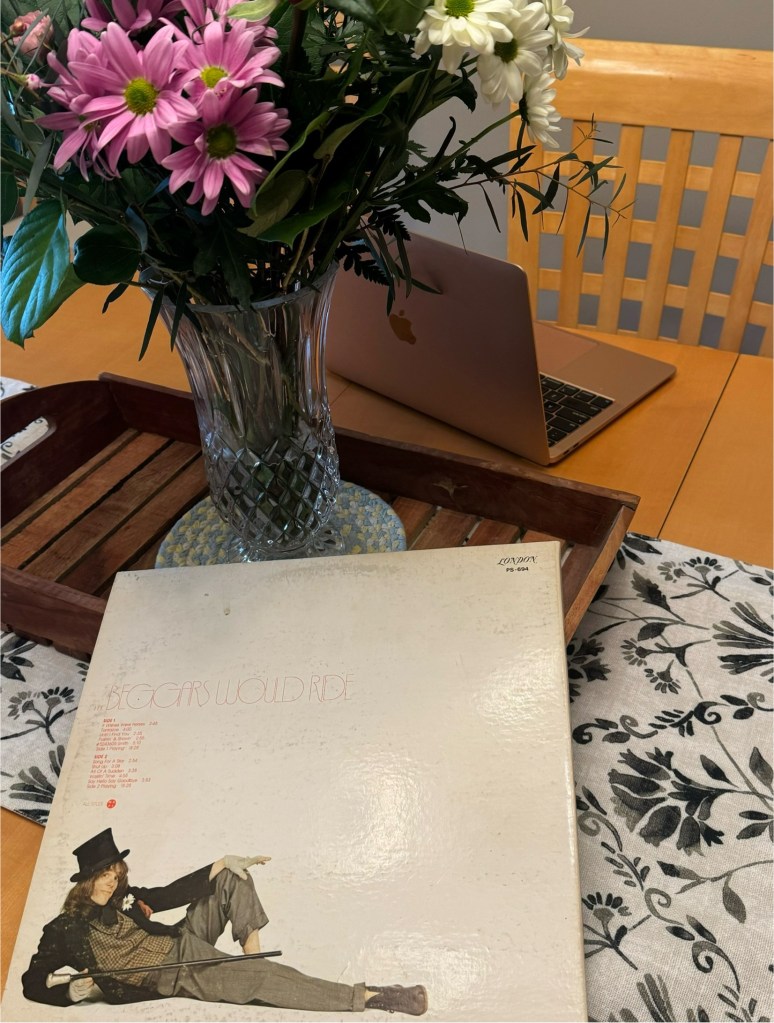
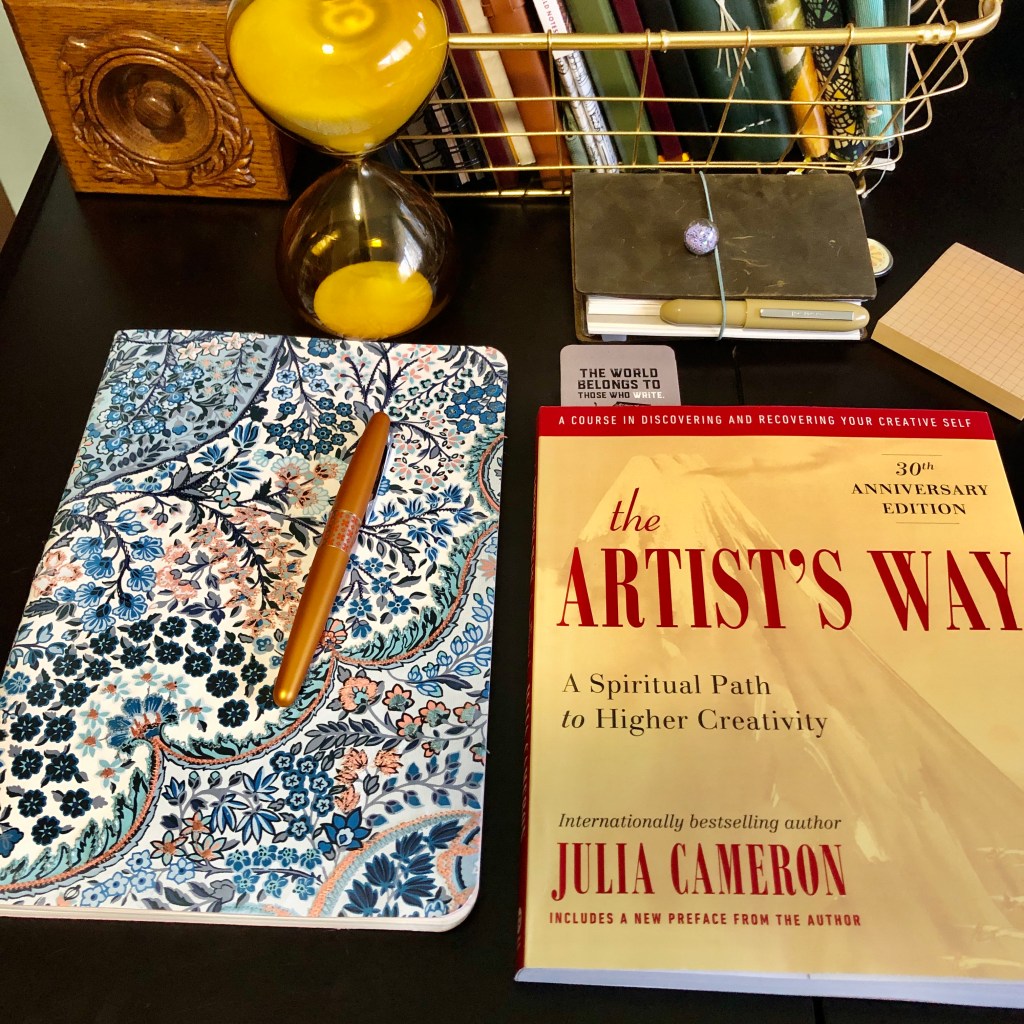
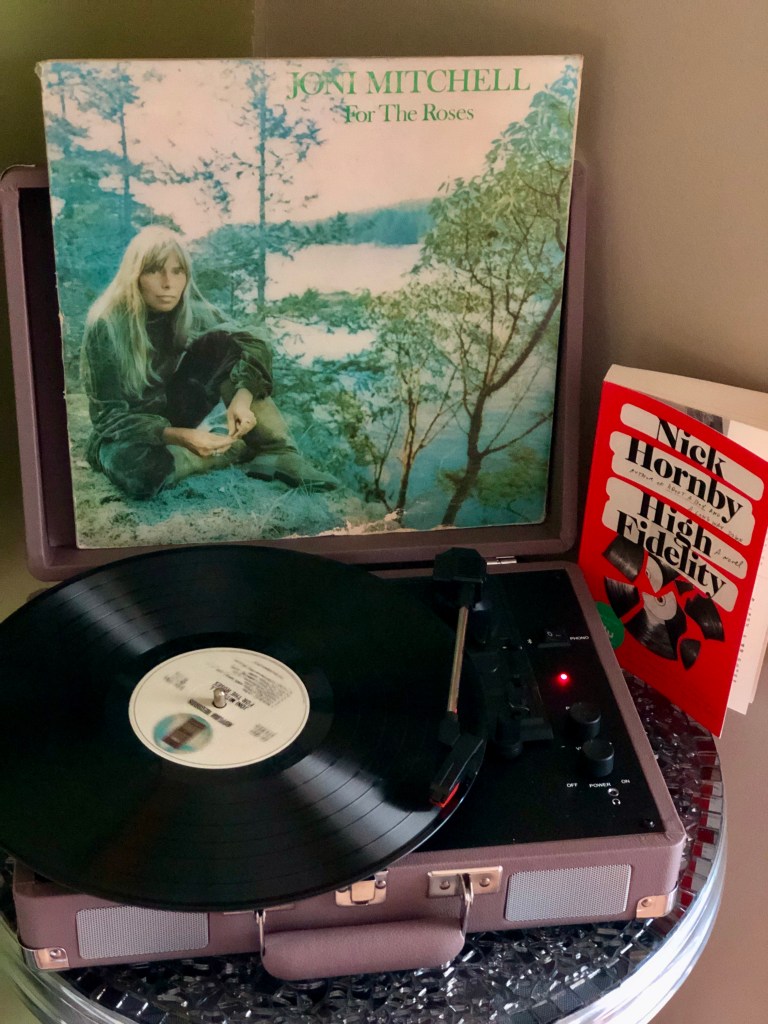
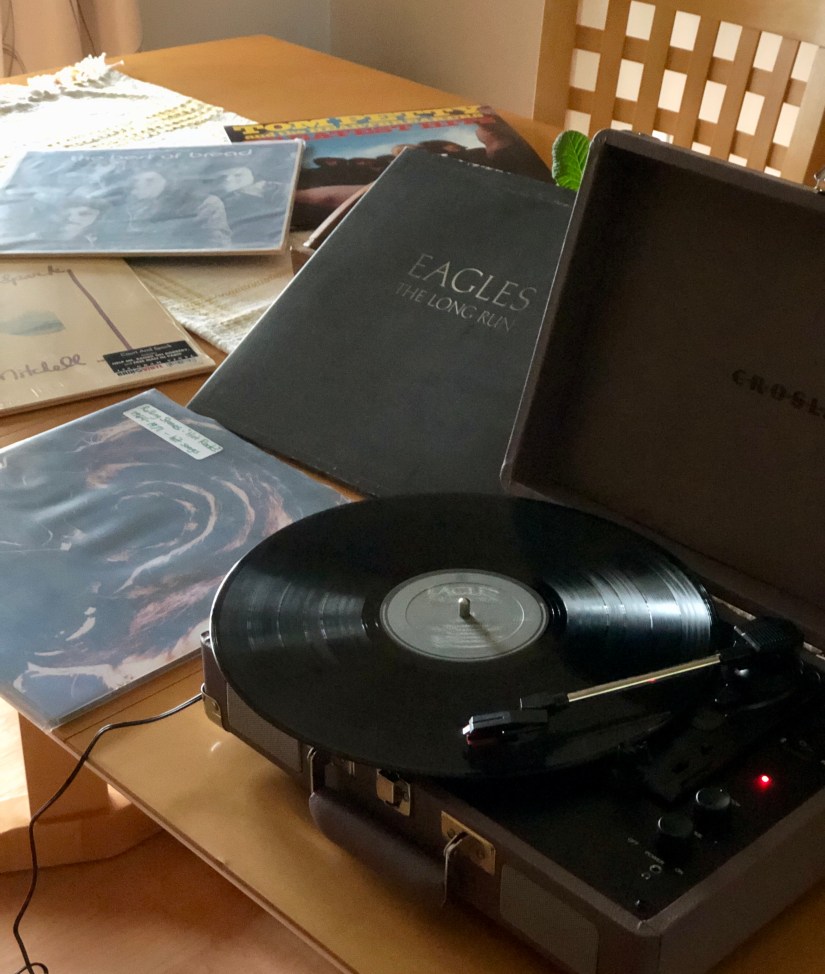

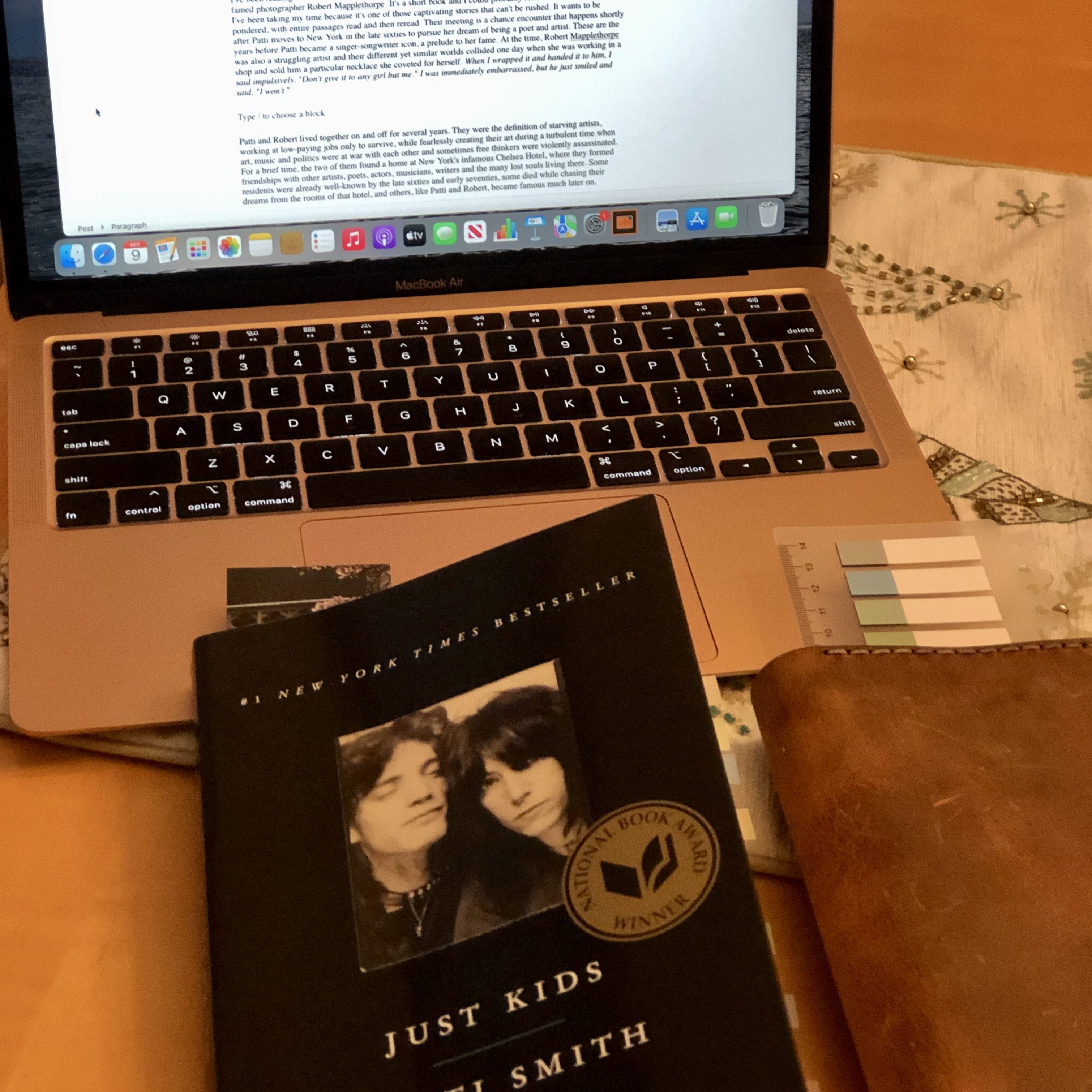
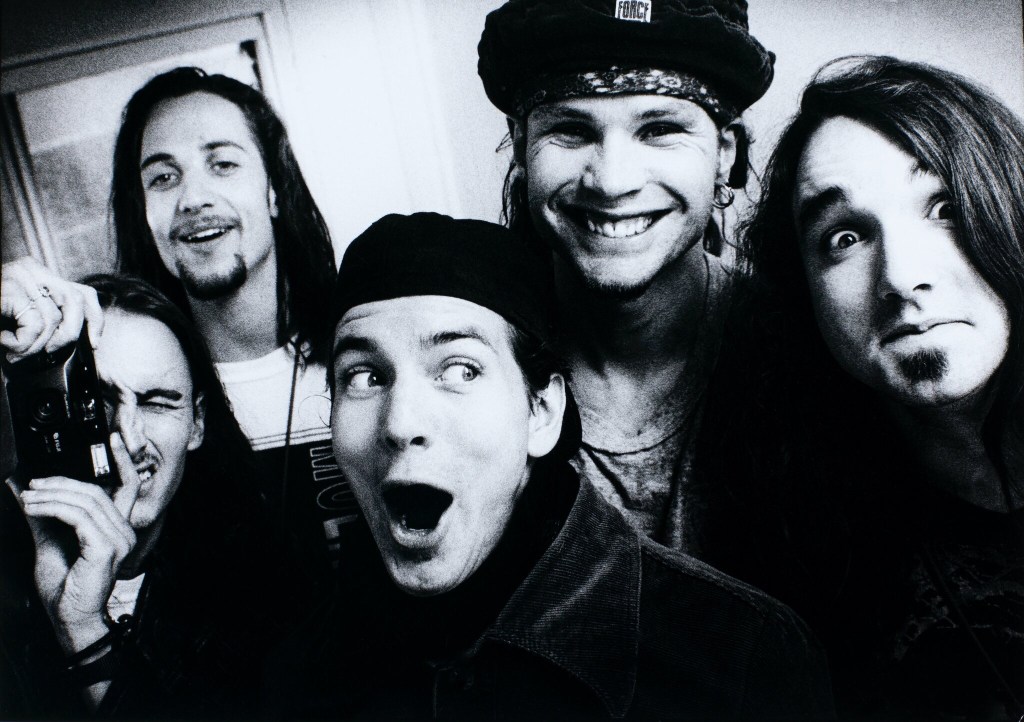
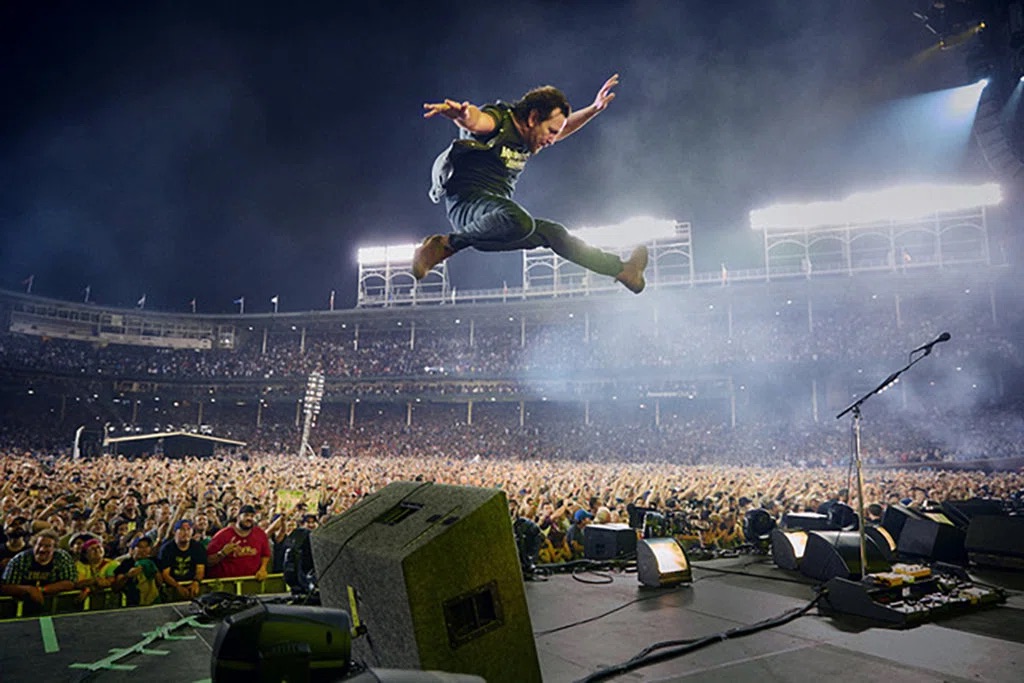

 A Roaring Good Yarn