“It was funny, she thought, that before she had ever had a job she had always thought of an office as a place where people came to work, but now it seemed as if it was a place where they also brought their private lives for everyone else to look at, paw over, comment on and enjoy.” ~ Rona Jaffe, The Best of Everything
“The Best of Everything” by Rona Jaffe was published in 1958. Jaffe herself worked at a publishing house in her early twenties that was the model for the fictional Fabian Publications in this story beginning in 1952. She relied on her own background and her young life experiences to write the novel in her mid-twenties, but also interviewed many of her peers about their individual experiences working at the time as secretaries and assistants in New York City. The result is a well-developed and portrayed cast of twentysomething, female characters: Caroline, April, Gregg, Barbara and Mary Agnes, each with their own ideals, career pursuits, dating mishaps, and dramatic struggles within sexist workplaces, while appearing to live glamorously in crummy apartments with only big dreams and no money to show for it.
The novel was long out of print until, rumour has it, Don Draper was seen reading it in his pyjamas in an episode of “Mad Men”. Perhaps that’s what prompted Penguin to eventually reissue it as 65th-anniversary classics edition. It’s the gorgeous cover art (by Michelle Thompson) of this particular edition that caught my eye and reminded me that I’d read it in my teens, twenty or so years after it’d been published. I didn’t have any lasting memories of it until I picked it up again just last week and found myself hooked from the first paragraph: “You see them every morning at a quarter to nine, rushing out of the maw of the subway tunnel, filing out of Grand Central Station, crossing Lexington and Park and Madison and Fifth avenues, the hundreds and hundreds of girls. Some of them look eager and some look resentful, and some of them look as if they haven’t left their beds yet.”
Strong imagery for anyone who has ever had to commute long distance by transit in the wee hours of the morning, just to make it to work or school by eight or nine o’clock. For a brief time in my late teens–at the start of the eighties–I commuted by bus to downtown Vancouver five days a week from way out in the burbs to an office job I needed but hated. There wasn’t rapid transit in my area quite yet and this was not my dream job. Thankfully, I soon found an office job closer to home; also not an ideal situation, but it paid the bills a little better and prevented me from getting up every weekday morning at 5 on the dot. One time while commuting that very long way to the downtown core, I managed to get a spot in a bench seat that ran sideways and faced the open aisle at the front of the tightly packed bus. I used to fight to stay awake, terrified I’d miss my stop and end up alone in the far side of the city and, even worse, late for work. It always got harder to sit upright once the bus reached the freeway and there weren’t regular stops to jolt passengers out of their restless, forward head-bobbing.
On this particular morning, I’d stayed out too late with friends the evening before and therefore only had myself to blame when I woke up suddenly on hands and knees in the middle of the aisle. I was too shocked to be embarrassed at first, until I saw others around me snickering and pointing. Dazed and also dying a little inside, I struggled to get up off my knees in a suit skirt and heels. A kindly, older gentleman rose from his seat to help me up in the speeding, swaying bus and I still remember what he said, “Don’t sweat it, honey, we’ve all been there before.” Now I still can’t be sure if he meant on hands and knees dying of embarrassment or so exhausted in the moment that the only way was down. Regardless, it’s a fitting statement for how I felt while reading this novel again–we’ve all been there before.
And if we haven’t been there before, then that’s probably due in part to women like the friends group in this novel, who struggled and fought professionally to be taken seriously or paid even half as well as their male co-workers and superiors. At the time there were only two ways out of that particular rat race, either over it by getting married or through it by sheer guts and tenacity. I couldn’t put this book down. Yes, I cringed at some of the outdated language and viewpoints, but I felt empathy for each of the characters in a strong, emotional way I haven’t found lately in some of the newer fiction I’ve been reading. I doubt I felt so emotionally invested when I first read it years ago. I think it may have been considered a scandalous kind of read once upon a time. This time it was like looking at an authentic black and white snapshot, one you stare at in amazement, thinking how mature and sophisticated young people seemed back in the day. Like they had it all figured out. One chapter into this book and you remember (or realize) they didn’t and circumstances could be truly heartbreaking for everyone involved.
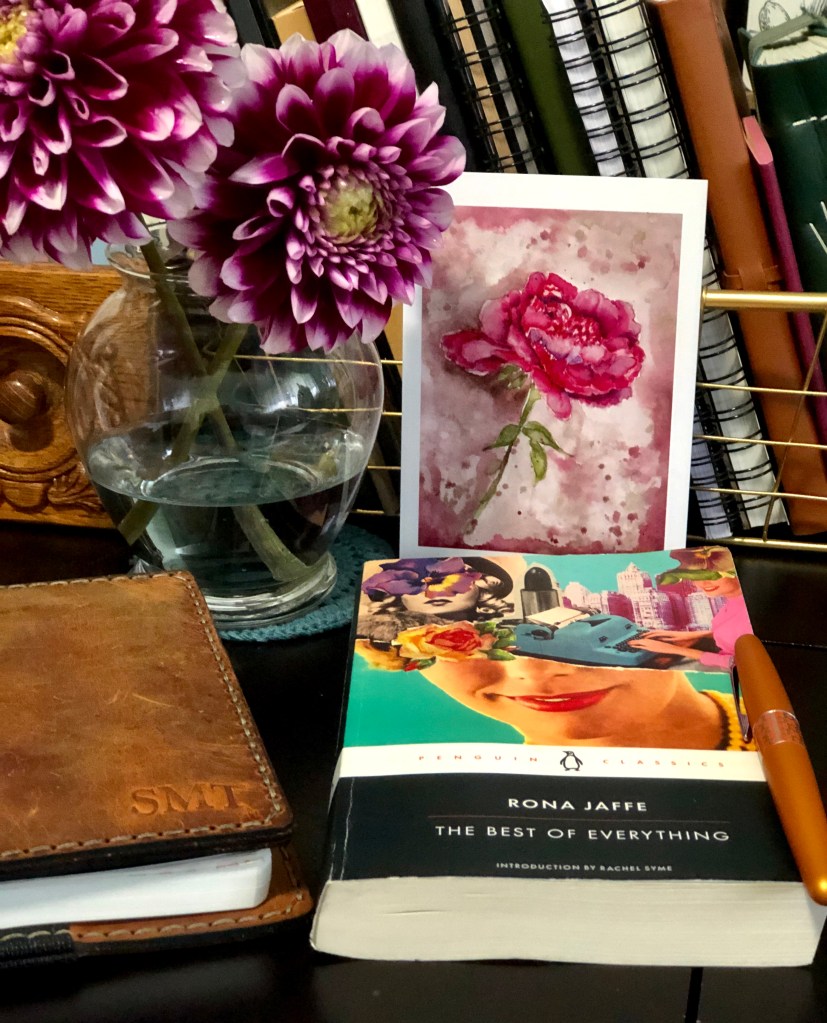
Note: highly recommend the Penguin Classics black and white edition, published in 2023. Not only is the cover lovely, the introduction by Rachel Syme is rich in background information about the book and includes a foreword written in 2005 by the late Rona Jaffe.
 A Roaring Good Yarn